In South Korea, Frank only had one item on his “must see” list – the Demilitarized Zone, or DMZ. It’s a narrow strip of land that separates North Korea from the South. And although its name (DEmilitarized?) would indicate otherwise, it was very militarized indeed! South Korean soliders, armed with machine guns and in full combat gear, nearly outnumbered the tourists that flocked there for the day from Seoul. But, I’m getting ahead of myself.
There are several tour outfits that operate out of Seoul, conducting half- and full-day tours of the DMZ. Our kindly Korean Home-Stay host suggested a company and called ahead to arrange our reservations. Our I Love Seoul tour bus was scheduled to depart at 8:00 AM from a meeting place at the large Lotte Hotel in downtown Seoul. We thought it would be easy to reach in a taxi, but we ended up with the most polite (read: SLOWEST) taxi driver in South Korea. By the time we reached the hotel, a popular meeting point for many tours, buses were already loading up. We scrambled to find our bus to no avail.
Luckily, we were able to talk a sweet reservation clerk into calling our tour company. They had left without us, as we feared. After they thoroughly chastised us for our tardiness, they agreed to send a minivan to fetch us and catch up with our bus.
Frank:
We don’t normally do the tour thing, but it was a smart idea in order to visit the DMZ. You CAN do it on your own, but with all the check points and dudes with gun, it’s not really the kind of place you want to be wandering around aimlessly.
The drive wasn’t terribly long, perhaps an hour or so and once you get to the DMZ they take you to a few different stops. Each destination was interesting and educational, but I’m sure they have a lot more meaning to those who live in Korea. People who have lived through the tense history or have family on the other side of the fence have a deeper connection the the area.
My favorite part of the tour was getting to go into one of the tunnels that runs under the DMZ. They were dug by the North in order to invade the South. Luckily, they were found before they were ever able to be put to use.
Meg:
Our tour bus dropped us off in downtown Seoul in early afternoon. There was still plenty of time to enjoy the sights in the city before we headed out for our last night in Korea.
We arrived in Busan by way of high-speed ferry from Fukuoka. We could have reached Zen Backpackers by Busan’s extensive subway system, but we opted for a cab. It dropped us off right in front of a high-rise apartment building, home to Zen Backpackers hostel. Once inside, we were greeted by our affable host, June Park. He let us settle in before providing us with a map of Busan and a wealth of information about the city and the immediate area.
We were starving, so we quickly followed June’s directions to the nearby thoroughfare, where we found an abundance of food choices. In addition to the sit-down restaurants, there were also plenty of street vendors, selling every type of food imaginable (and some that were beyond imagination, at least mine!).
After we’d eaten something, we got down to the business of exploring Busan. It’s well-known for its beaches, which are packed in the summer. As our time was limited (and we were headed to Hawaii from Korea, where we would get plenty of beach time), we decided to focus on one of the other standout features of Busan: The Jagalchi Fish Market. Located just a short subway ride from Zen Backpackers, it was a very different experience from the Tsukiji fish market in Tokyo. With the exception of the electricity, it probably hasn’t changed much in the past couple hundred years or so, especially the outdoor stalls.
Frank:
If you know me, you know that the first thing I look for when I visit a new place, beside great new food, is a pool table… any pool table. Fortunately for me, in Korea I didn’t have to search far. All you need to do is look up (most bars and restaurants are somewhere between the second and seventh floors of the buildings). Almost every street corner had a billiard hall somewhere among the floors, all you had to do was look for the sign with the brightly colored balls. The only tricky part was finding the door and staircase that would lead you there.
Needless to say, Koreans like to play pool and they take it seriously. You don’t play in bars, and you don’t drink while playing. Most halls have the familiar tables of pockets billiards that we are used to here in the US. But most Koreans, and by most I mean pretty much any serious Korean player, play Carom billiards. And the really good players play three cushion billiards. Both games are played on a regulation size (4′6″ by 9′) table with absolutely no pockets. Carom billiards is played with 4 balls: Two red, one yellow, and one white. One player takes the white ball as his cue ball and the other player takes the yellow as his. The object is to hit your cue ball and have it touch both red balls in one shot, without touching your opponent’s cue. Each time you do this you get one point and get to shoot again. In three cushion billiards, you use three balls (yellow, red, and white) and on your turn you need to shoot one of the yellow or white (you can choose before each shot) and have it touch both the other balls. The catch is that the ball you choose as your cue ball needs to hit three rails before it hits the last ball. Play this game enough and let’s just say that you will develop a sick bank shot and you will never have to worry about being snookered behind a ball again.
While staying at the Zen Backpackers Hostel, our host June told us that he was one of the best players of this game around. I told him how much I loved pool and that I was very interested in learning about this game, so he invited me to come play with him and his friend that he had been teaching for the past few months. To my surprise, I beat his his friend in my very first game. Of course June beat us both, but by the time I left Korea I got good enough that I was playing and beating locals in pool halls across Seoul.
When we found out that we could actually stay a night at a working Buddhist temple in Kyoto, my inner history nerd lit up with joy. I have a fascination with Japanese history, and the temples (and the monks they contain) played a major role in the social, cultural and political development of the country. As influential as they may have been, austerity has always been central to Buddhist philosophy, and our room, while comfortable, was appropriately sparse.
Frank:
Kyoto is a quiet, beautiful little town which was a relaxing break from the city life. It also has my newly found favorite place on earth, The Bamboo Forest. I don’t know what it is, perhaps I was a giant panda in a former life, but I am drawn to bamboo and I feel at home when I am around it. I have been to many places in the world that had bamboo but this was the most beautiful and peaceful places I have ever been.
We rented some bikes, rode through the forest and then continued on through the countryside looking for the Golden Pavilion. On the map it seemed like it wasn’t very far, and really, it wasn’t (maybe 5 miles or so). However, it was up and down steep hills almost the entire way. It was very pretty and quite enjoyable… for maybe the first mile or so. It continued to be pretty, but by mile 3 Meg was not very happy. After it was over, we were both glad we had done it, though. It wasn’t every day we got to see the back roads of Kyoto, so up close and personal.
Luckily, the ride back from the Golden Pavilion was mostly downhill. We pack up and headed out to Osaka, which was only a half hour train ride away. We both couldn’t wait to check into our hotel to take a shower and then head out in search of our favorite Japanese snack, Tako Yaki.
Before we left for our honeymoon, we decided to try to do something “dangerous” in each country we visited. Since we didn’t have enough time to climb Mount Fuji, we decided upon something equally perilous: eating blowfish. Frank was especially enthusiastic about trying it, while I was a little reticent. The notion of putting my life in the hands of some chef I’d never met didn’t strike me as especially wise.
My mind changed when we stumbled upon Tara Fugu. Even from the exterior, there is no mistaking their specialty: A string of lights shaped like blowfish adorns the entrance. Their menu features blowfish (or fugu in Japanese) almost exclusively. If we were going to eat some fugu, this was definitely the place to try it!
Frank:
Although I can speak enough Japanese to get a point across (especially when it comes to food), I have only gotten two Japanese symbols memorized. And unless I am reading about a boy named Kano they don’t really help me out much. Of course the menu was entirely in Japanese, so I just asked the chef to make us their specialty.
The danger of eating blowing lies in the preparation. If the toxic parts of the fish are not removed properly, the meat can become contaminated. It’s not actually a poison, it’s a neurotoxin that can lead to paralysis if ingested, and the victim, still aware, is asphyxiated. The worst part is that there is no known antidote.
With that in mind, I took my first bite of Fugu in sashimi style. It was very mild in flavor but still very good. Since Meg didn’t eat much I ended up eating the whole plate, which caused my tongue and lips to feel tingly and slightly numb (as there are always traces of the toxins throughout the whole fish). After the chef prepared fried fugu, he then brought out the Fugu fin sake. He told us it was on the house and of course we were very grateful. I know that the Japanese are known for their hospitality but what he did next really surprised us.
We had stopped at this restaurant on our way to the Tokyo Train station, so we had all our bags with us. The station was quite a ways away and meant making a few transfers on a subway to get there. However, the chef insisted on loading us into his car and driving us there himself. It would have been rude to decline, so we allowed him to take us while he was still wearing his chef jacket and apron.
When we arrived in Tokyo, we were a little jet-lagged (these all natural tablets helped, but there’s only so much you can do when it comes to a 12 hour time difference). So when we found ourselves awake before the sun came up on our first full day in Japan, we decided to make the most of our pre-dawn alertness and head to the Tsukiji fish market.
When we arrived, it took us a few minutes to get our bearings. We got a map from one of the many vendor stalls that are lined up in front of the fish market, which was incredibly helpful in navigating the labyrinthine system of stalls, both inside and outside. Although we were on our own when it came to dodging the crazy mini-forklifts that zipped all around the market.
Frank:
I can’t begin to explain my excitement when I saw how fresh and how diverse the seafood that they had was. Being an ex sushi chef myself I would have given anything to have a kitchen in my hotel room. Instead I had to settle for having sushi at one of the local sushi bars at the fish market. Though it was the most expensive breakfast I had ever had, I also ate the best single bite of sushi I had ever had. The chef served us both a piece of anago (salt water eel), which I had had before, but this was done better than I will probably ever find again… and believe me, I have been looking.
Meg:
Later that day, we discovered that there was a sumo tournament (or as our hotel concierge called it, sumo “races”) going on. We didn’t know what to expect, but we didn’t expect to enjoy it as much as we did. The ritual was interesting, but seeing two giant men clash and hearing the roar of the crowd was incredible.
After the tournament, we headed out in the stadium’s neighborhood for some dinner. We saw the sumo wrestlers, in traditional garb, out and about (they live and train in the neighborhood). It was an interesting contrast to see a wrestler in traditional sumo kimono (yukata) listening to his iPod.
Our first day in Japan served as a crash course in Japanese culture. We ate the best sushi of our lives, and developed an appreciation for a new sport. Not bad for 24 hours in Tokyo.
We kicked off our honeymoon with a glass of champagne during our 13 hour long flight to Japan. It was made bearable by the fact that we were in business class, so at we least had pretty good food and free drinks.
We left at 1pm on Monday and arrived in Tokyo at 4pm on Tuesday. Getting to the hotel was a bit of a challenge that was made somewhat easier due to the fact that I had learned quite a bit of Japanese before we left. However, I could only read two symbols so it’s a good thing most signs and subway ticketing machines had English translations.
Narita airport is quite a ways outside of the city so we did need to take a train. There is a 90 minute train and a more expensive, express train that takes only 50 minutes. But since we had gotten a 7 day rail pass we could jump on any of the JR (Japan Rail) trains, which both trains were, at no extra cost. The train brings you to Tokyo station where you can then take a subway to any part of the city. However, after looking at the map of the subway, we realized that we would need to change trains something like 4 or 5 times, we decided to save our subway navagation adventure for when we aren’t carrying 40 lb backpacks.
Meg:
We arrived at the Prince Park Tower via taxi. Checking in, we got our first real taste of Japanese hospitality. The staff was so pleasant and accomodating. It was really nice to be greeted with such warmth after a long and tiring day.
The hotel itself is impressive. The lobby is modern and spotless with a glass elevator that rockets up to the top (33rd) floor. We got into our room (which was much bigger than any other we would stay in while in Japan) and were immediately floored by the incredibly view. Tokyo Tower and the city skyline – not a bad way to start our time in Tokyo!
We actually made it through… and no one died. Besides a few snafus with the music everything went very well.
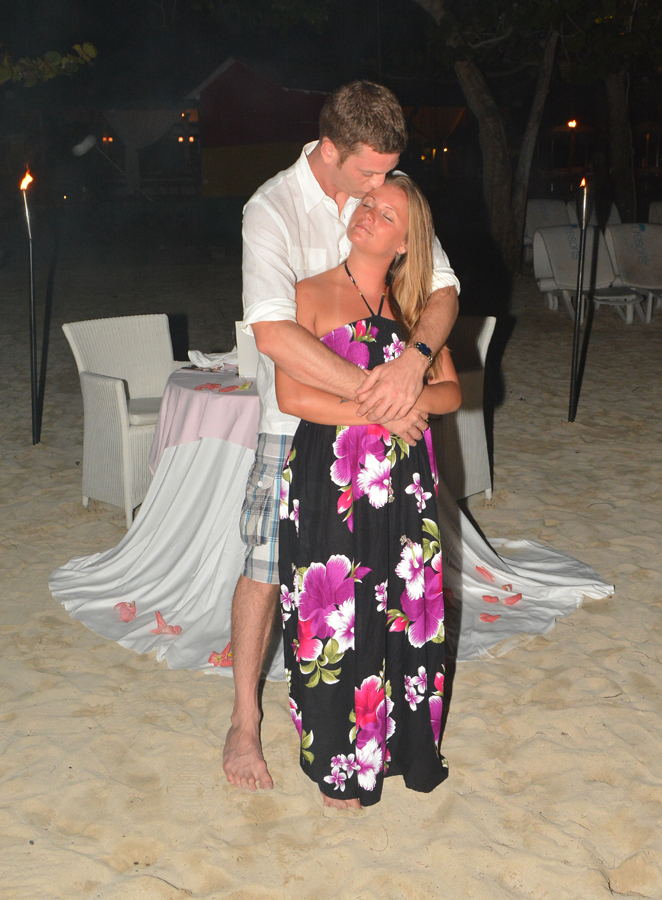
We had a great time and hope everyone enjoyed themselves as much as we did. We thank everyone for coming and making our day special. And we have to give an extra special thank you to our friends John and Mo for taking such great photos of us.
We have posted a few here but there are many more on our facebook pages, which you can visit through the link given above.
Meg:
We added some personal touches to our wedding, which we think really made it “us”! After our first dance (the middle school shuffle – we’re not exactly ballroom dancers!), we busted out some karaoke! Also, each table at our reception was named after a place we have traveled to.
We rounded out the evening with another karaoke song (“Don’t Stop Believing” by Journey!). Then we headed out for a little after-party in style – a stretch limo. Heading to The Mohegan Sun’s Sky Bar for martini’s was an amazing end to an amazing night. But the fun didn’t stop there! The next day, we headed back to New York to start the really fun part – our honeymoon!
Photos and video from that will be up soon! Stay tuned!
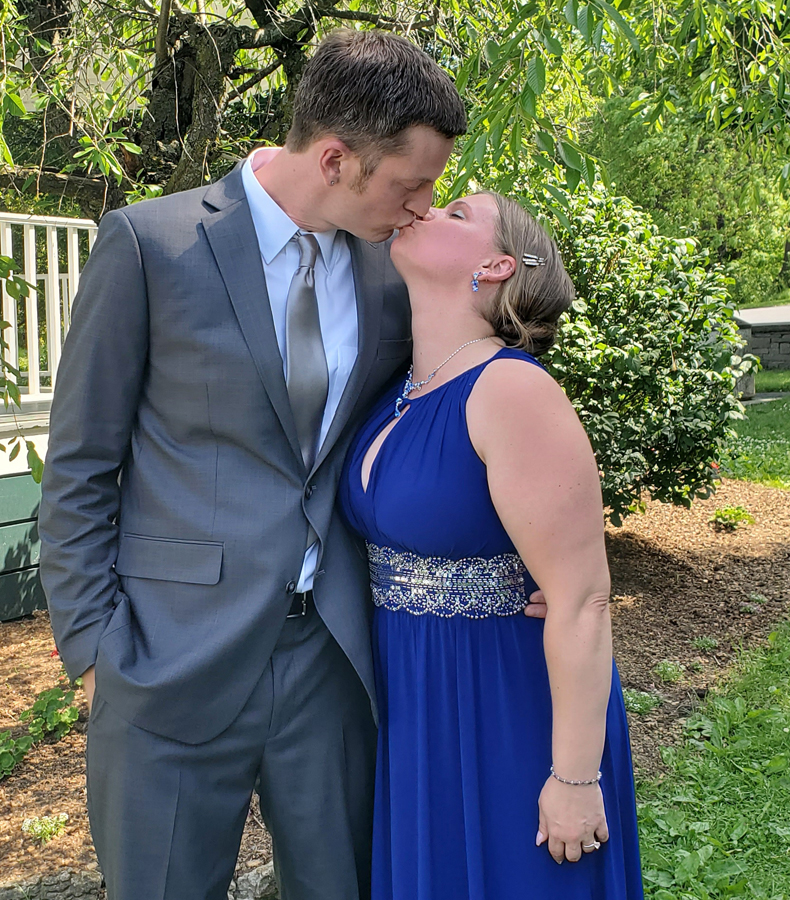
On September 12th 2009 Meg and I got married. We just got back from our honeymoon. We spent a week in Japan, a week in Korea and a week in Hawaii.
This video was shown at our wedding to our guests to explain how we met and, for those who hadn’t seen our blog, to shed a little light on why our wedding was travel themed.
Venice is not the most fun city to navigate if you are claustrophobic and hate to be stuck in the middle of a crowd. It can feel, at times, like you are being herded off to slaughter. However, there is a reason why so many flock to this tiny group of islands, and that’s because it’s one of the most beautiful cities in Italy, if not the world.
We arrived in Venice by train via Florence, although it does have its own airport on the “mainland” (at which you would still need to take either a train or a taxi out to the islands). If you didn’t know it already, Venice is actually a group of many smaller Islands surrounded by many small canals and with one large, main, canal snaking down the middle.
We stay at the Hotel Vecellio, which is on the northern side of the group of Islands and is featured in the video above.
We had a wonderful time in Venice and was actually our favorite place we visited in Italy (at least so far).
We arrived in Florence in the late afternoon. We checked into our hotel, the Hotel Martelli. It was very quaint and in an excellent location – just a few blocks from the train station and within walking distance to all the major sights. We had worked up quite an appetite by this point, so we headed out in search of some dinner. We had heard wonderful things about the hearty, rustic food of Tuscany and were eager to try some of the region’s specialties – cannelloni beans drizzled with local olive oil, crusty bread fresh from the oven, and regional meats and cheeses. We decided upon a highly-rated osteria, and proceeded to have the most mediocre meal of our entire trip. Everything we had was a little too bland, from the appetizer of local meats and cheese, to my boring cannelloni beans, down to the tasteless bread.
Frank:
I don’t know what I was expecting out of Italian food in Italy, but this surely wasn’t it. For me there are only two schools of thought when it comes to cooking: Make it simple with fresh great ingredients, or take something mediocre or even undesirable and get creative with the ingredients or preparation in order to make it taste incredible. Here in Florence, we got stale, bland food, served at an over-crowded tourist trap, full of people who might call Boyardee a chef and what he serves in a can, Italian food.
I’m sure, now, that there is great Italian food somewhere in Florence. However, you won’t get any help finding it from TripAdvisor.com. By this point in my trip I was scared, thinking everything I knew about Italian cooking was a lie. I was now on a mission to find the Italian food that I knew was around, but I also knew I would need to get away from the hordes of college kids and tourists that would be just as happy with a bowl of pasta served at the McDonald’s nearby.
Meg:
To compensate for our disappointing meal, we treated ourselves to some wonderful gelato. The quality and assortment of flavors cannot be beat. They even have a rose flavored gelato (apparently a Florentine specialty)!
On our way back to the hotel, we stopped at a wine store and picked up some inexpensive regional Chianti. Back at the hotel, we took our wine out to the (shared) balcony and relaxed under the Tuscan stars. The moment we uncorked that bottle, we felt we had our first true taste of Florence. It may have been cheap, but we enjoyed it more than most of the better wines we’d ever had in the States.
After a couple glasses of wine, we decided the night was still young. We took a stroll over to the Duomo. It turned out to be the perfect time to go. We could inspect the famous Baptistry doors up close without being disturbed by other tourists. We could marvel at the artistry of the Duomo’s exterior and take as many photos as we wanted.
Frank:
It wasn’t long before we realized just how much of a college town Florence was. Almost every bar we stepped into, we felt like we could be at some frat pub back home. The tourists had all gone to bed (most likely in order to get up early, so they could get a good spot in line at the museums) and this was the time for the other type of visitors to come out and play. These are the visitors that will spend a semester or two in some sort of study abroad program.
Either way, Florence left a bad taste in my mouth and the only good part about it was getting to see Michelangelo’s David in person and almost in the flesh. Its lifelike beauty will have you waiting for him to take a breath and look down at you.
We woke up at decent hour and made our way to the Galleria dell’Accademia. Again, we were in town during the Italy’s Culture Week and were able to go right in free of charge. We couldn’t believe that the place was practically empty. After spending a few moments trying to take pictures without the guards noticing (this is not allowed) we headed over to the Duomo. “Oh, so this is where you all are,” I thought, eyeing the masses of tourists. I would rather be in time square, I remember thinking. I saw what I had come for so I was ready to go. However Megan had just a few more things she wanted to check out before we hopped on a train for Venice.
Meg:
I had my heart set on visiting the Uffizi Gallery. An art minor in college, I figured I had suffered through enough boring lectures and slideshows to warrant a peek at the real thing. We found the gallery not far from the Accademia – or rather, should I say we found the line for the gallery. It wound around the building and appeared to be endless. We asked someone near the front how long they had been waiting – 2 hours! I read before that it is wise to secure advance tickets, but had no idea how sage this advice really was. We debated a bit, and then decided to skip the museum in favor of some more sightseeing before we had to get on our train to Venice.
We do not regret our choice, as it allowed us to linger on the ancient Ponte Vecchio (a bridge spanning the Arno River), do a little shopping and leisurely wind our way back to our hotel to get our bags. It was a beautiful day in Florence, but truthfully, we weren’t sorry when our train pulled out of the station and headed towards Venice. If we ever make it back, we really hope to dig deeper and discover the real city behind the Disneyworld facade.